
Cal Poly DxHub and Orcutt Union School District Launch AI-Powered Parent Assistant to Streamline School Communications
Overview
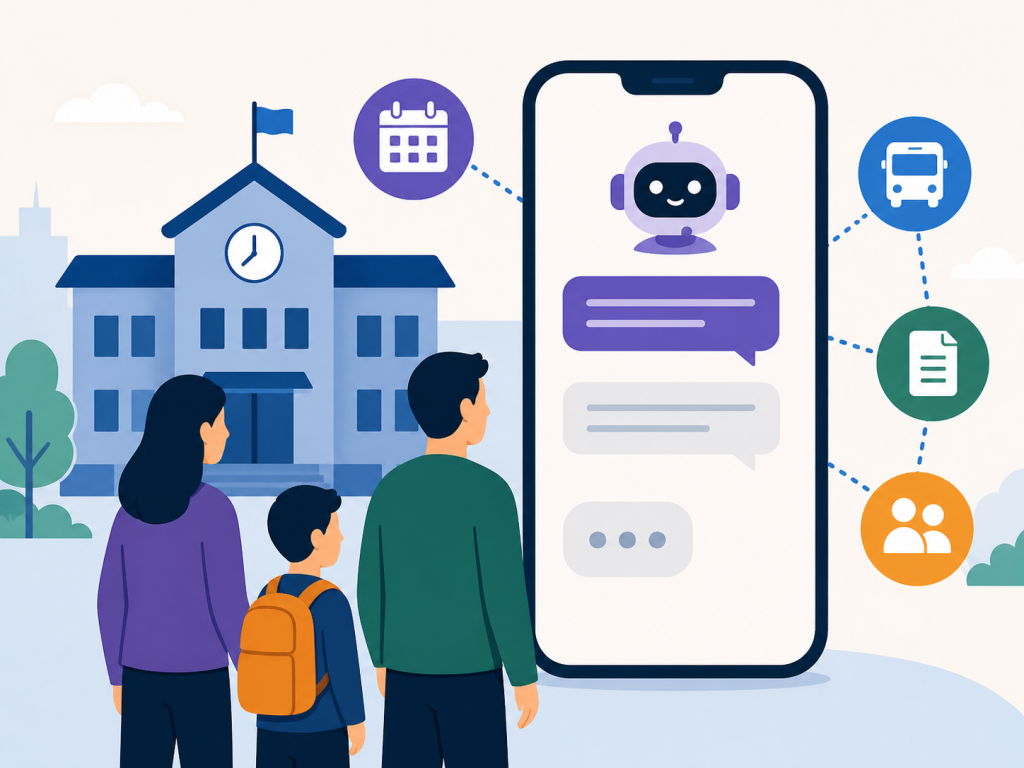
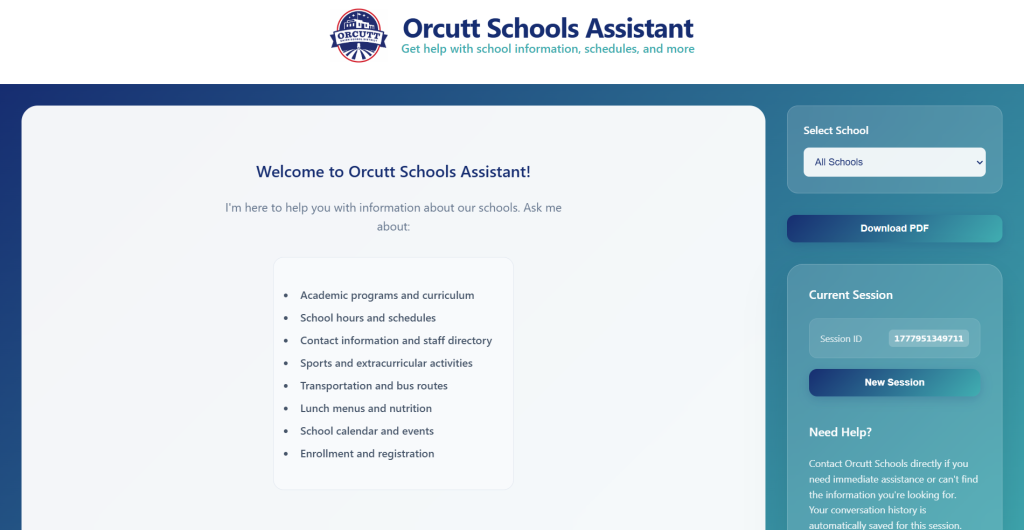
The Cal Poly Digital Transformation Hub (DxHub), powered by Amazon Web Services (AWS) and part of the AWS Cloud Innovation Centers (CIC) program, partnered with the Orcutt Union School District to develop a generative AI chatbot that helps parents get the information they need from the district’s websites through a natural conversation with AI. The goal was to leverage AI technology to answer frequently asked questions based on the district’s existing website content, policies, and documentation, ultimately reducing administrative burden on school staff while improving response times and accessibility for the community. The assistant is now live at orcutt-ai.techreformers.com, deployed by Tech Reformers inside the district’s own AWS account. This collaboration provided Cal Poly students with hands-on experience in solving real-world public sector challenges while delivering tangible benefits to the Orcutt school community.
Problem
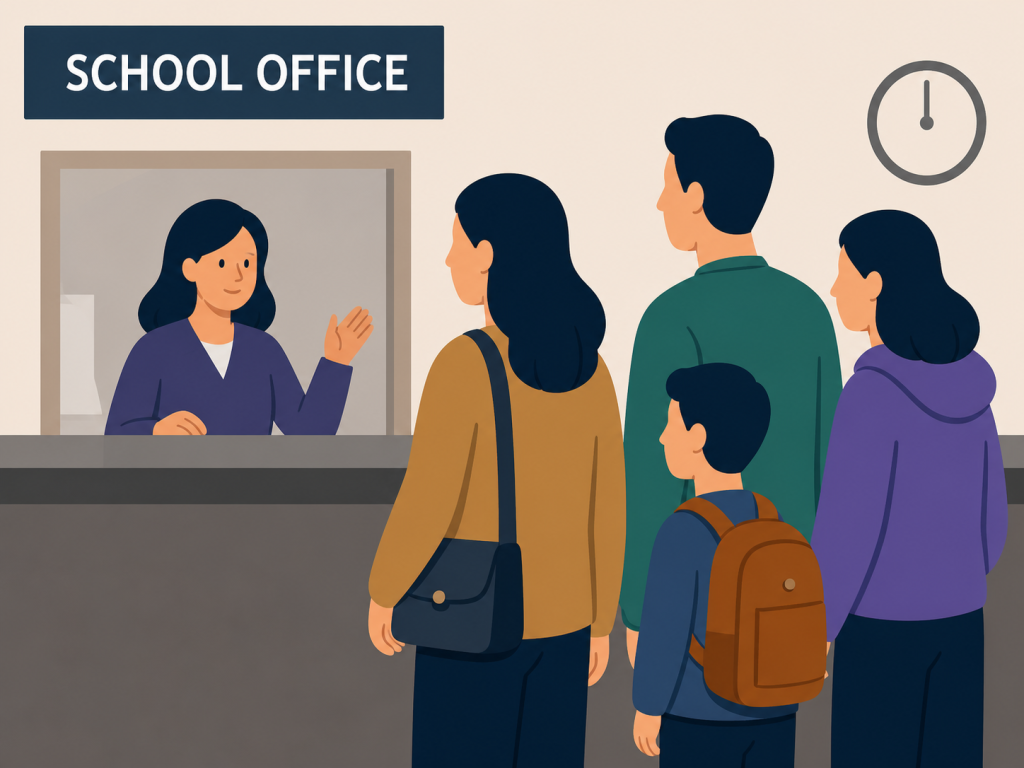
School districts nationwide face mounting pressure to provide timely, accurate information to parents and students while managing increasingly limited administrative resources. Orcutt Union School District, serving around 4,500 students across six elementary schools, two junior high schools, one charter school, and an independent study school in Santa Barbara County, experienced this challenge firsthand as staff members spent significant time fielding repetitive inquiries about enrollment procedures, required documentation, school policies, transportation schedules, and other information already available on their website. The situation reached a point where parents would frequently visit school offices in person or call during peak hours to ask questions that could be answered through existing online resources. This constant stream of routine inquiries — covering topics like “How do I enroll my child?” and “What are the school calendar dates?” — diverted valuable staff time away from more complex educational and administrative tasks that required human expertise. The district recognized an opportunity to implement an AI-driven solution that could provide accurate answers to common questions, reduce the volume of human escalations, and allow their team to focus on higher-value activities that directly impact student success.
Innovation In Action
The AI-powered assistant uses natural language processing to search and synthesize answers from multiple district sources, including the school websites, student handbooks, enrollment guides, transportation policies, and frequently updated information about events and deadlines. Rather than requiring a parent to search through several pages or wait for office hours, the assistant takes a plain-language question and composes a response grounded in the district’s own materials. Every response is transparent and citable, so users can trace each answer back to the specific page on the district website it came from, allowing users to verify the information they receive. The assistant also provides multilingual support, ensuring accessibility for non-English speaking families. Because the assistant runs on the web and is always available, parents and students can access information at any time, from any device, without being limited to office hours.
Technical Solution
The application leverages several AWS managed services to ensure scalability, security, and performance with minimal operational overhead for the district. Amazon Bedrock provides the generative AI foundation, using Anthropic’s Claude for natural language understanding and response generation, with Amazon Nova Lite handling lightweight query classification and intent recognition. An Amazon Bedrock Knowledge Base automatically ingests and processes content from the Orcutt Schools websites to create a searchable knowledge repository, and an Amazon OpenSearch Managed Cluster acts as the vector database that stores and retrieves relevant passages through semantic search.
AWS Lambda functions handle serverless processing and orchestration, while Amazon API Gateway exposes a REST interface that the chat frontend calls from the browser. Conversation history and session state are persisted in Amazon DynamoDB so the assistant can carry context across follow-up questions and so the district can analyze usage patterns over time. The user interface is a React application styled with Tailwind CSS, hosted in Amazon S3 and delivered through Amazon CloudFront, with the entire stack defined as infrastructure as code using the AWS Cloud Development Kit (CDK) and monitored through Amazon CloudWatch. All user data and generated content are processed within the AWS environment, supporting privacy requirements in educational settings. The end-to-end flow a parent experiences when they ask a question is shown below.
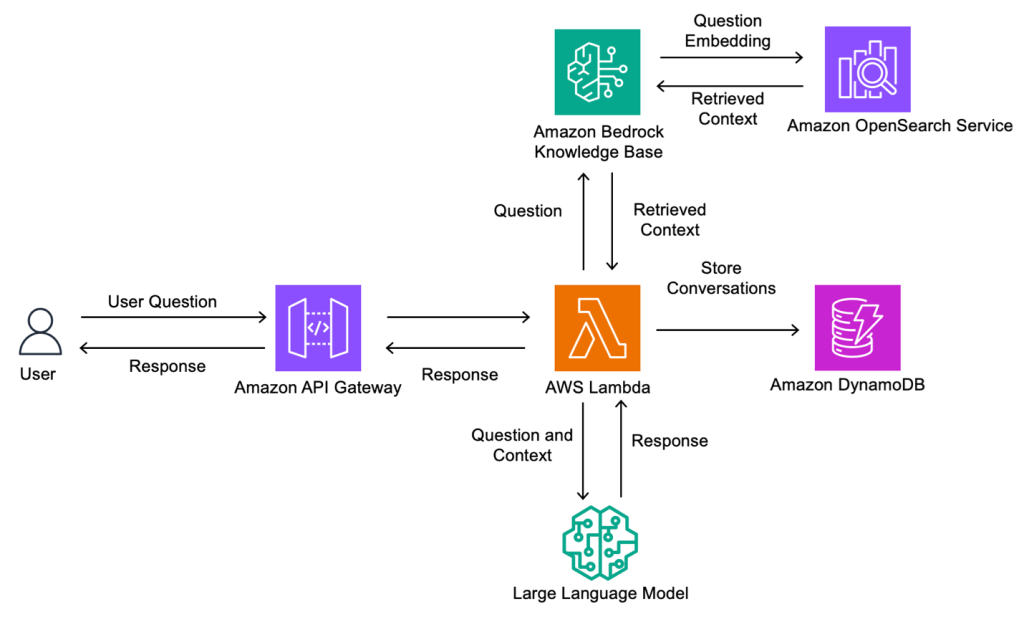
A user sends a question to Amazon API Gateway, which invokes AWS Lambda. Lambda forwards the question to the Amazon Bedrock Knowledge Base, which generates a question embedding, queries Amazon OpenSearch Service, and returns the retrieved context. Lambda combines the question with the retrieved context and sends both to the Large Language Model, which returns a response. Lambda stores the conversation in Amazon DynamoDB and returns the response through Amazon API Gateway back to the user.
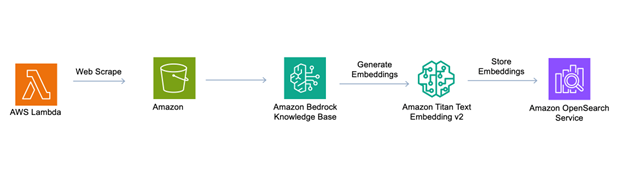
Keeping the assistant current is handled by a separate ingestion pipeline that can be run on demand or on a recurring schedule. An AWS Lambda function web-scrapes the district’s configured websites, writes the scraped pages and generated metadata into an Amazon S3 bucket, and triggers the Amazon Bedrock Knowledge Base to sync. The knowledge base chunks the new content using a semantic chunking strategy, passes each chunk through Amazon Titan Text Embeddings v2, and stores the resulting vectors in Amazon OpenSearch Service, where they become immediately available to the chat path described above. Because the same pipeline runs every time, a change to the district’s website is reflected in the assistant’s answers without any manual re-training. The ingestion flow is shown below.
Next Steps
The assistant is now live in production, deployed by Tech Reformers inside Orcutt Union School District’s own AWS account and publicly available to the community at orcutt-ai.techreformers.com. Running the chatbot inside the district’s own AWS account gives Orcutt full ownership of the environment, the data, and the ongoing operations. Because the architecture is serverless and the knowledge base is fed by a configurable web scraping pipeline, the same pattern can be extended to additional districts simply by pointing the scraper at new sources and re-syncing the knowledge base, making this a reusable pattern for other K-12 districts looking to make their published information more accessible.

Supporting Documents
| Source Code | All of the code and assets developed during the course of creating the prototype. |
| System Architecture | A diagram that describes the technical components needed to implement the solution. |
About the DxHub
The Cal Poly Digital Transformation Hub (DxHub) is a strategic relationship with Amazon Web Services (AWS) and is the world’s first cloud innovation center supported by AWS on a University campus. The primary goal of the DxHub is to provide students with real-world problem-solving experiences by immersing them in the application of proven innovation methods in combination with the latest technologies to solve important challenges in the public sector. The challenges being addressed cover a wide variety of topics including homelessness, evidence-based policing, digital literacy, virtual cybersecurity laboratories and many others. The DxHub leverages the deep subject matter expertise of government, education, and non-profit organizations to clearly understand the customers affected by public sector challenges and develop solutions that meet the customer needs.