
Smart Rover AI Tutor: Bringing Guardrailed AI Coding Assistance to Student’s Desks
Overview
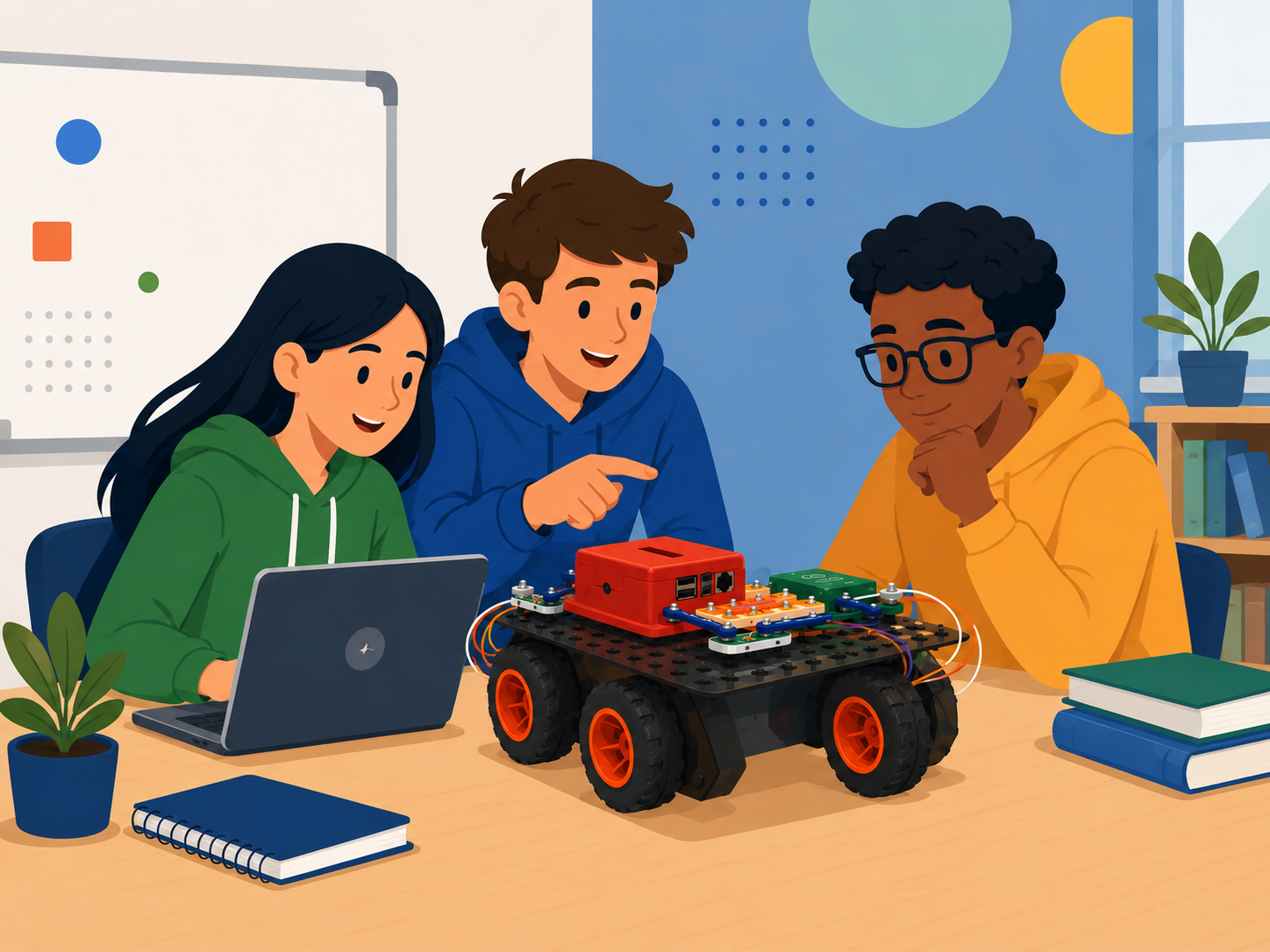
The Cal Poly Digital Transformation Hub (DxHub), powered by Amazon Web Services (AWS), collaborated with Deloitte’s Smart Factory and Believers program to develop an AI-powered coding tutor that guides students through hands-on programming projects with physical rover hardware called Smart Rover kits. This project creates a student-facing educational assistant that runs locally on Raspberry Pi units in classrooms, extending the DxHub’s reach into hands-on K-12 learning environments. Powered by Kiro, AWS’s AI-powered development environment, the Smart Rover AI Tutor integrates directly into students’ coding environment, providing real-time, conversational guidance as they work through Believers program existing rover coding projects and curriculum. Born from the AWS Cloud Innovation Center (CIC) model — a global network where universities partner with AWS to solve public sector challenges using cloud technology — the project represents a new model for how the DxHub delivers impact: building technology ecosystems that connect industry partners, university expertise, and K-12 classrooms.
Problem
Coding education for middle and high school students faces a fundamental scaling problem: meaningful learning happens through one-on-one guidance, but teachers cannot provide individualized mentoring to every student simultaneously. Enabled by Deloitte’s Believers program, students work with Smart Rover kits, manufactured at The Smart Factory by Deloitte @ Wichita, to learn Python programming on Raspberry Pi hardware. When students hit a roadblock, they need immediate, context-aware help that understands both the code they’re writing and the specific hardware they’re controlling. General-purpose AI tools might seem like a solution, but they can create new problems in educational settings: they readily hand students complete answers rather than teaching them to think through problems, they lack awareness of the specific hardware and project constraints, and they have no guardrails against generating content that violates school acceptable use policies. The need was clear — an AI tutor that teaches rather than solves, that understands the Smart Rover hardware intimately, and that operates within boundaries appropriate for student use.
Innovation In Action
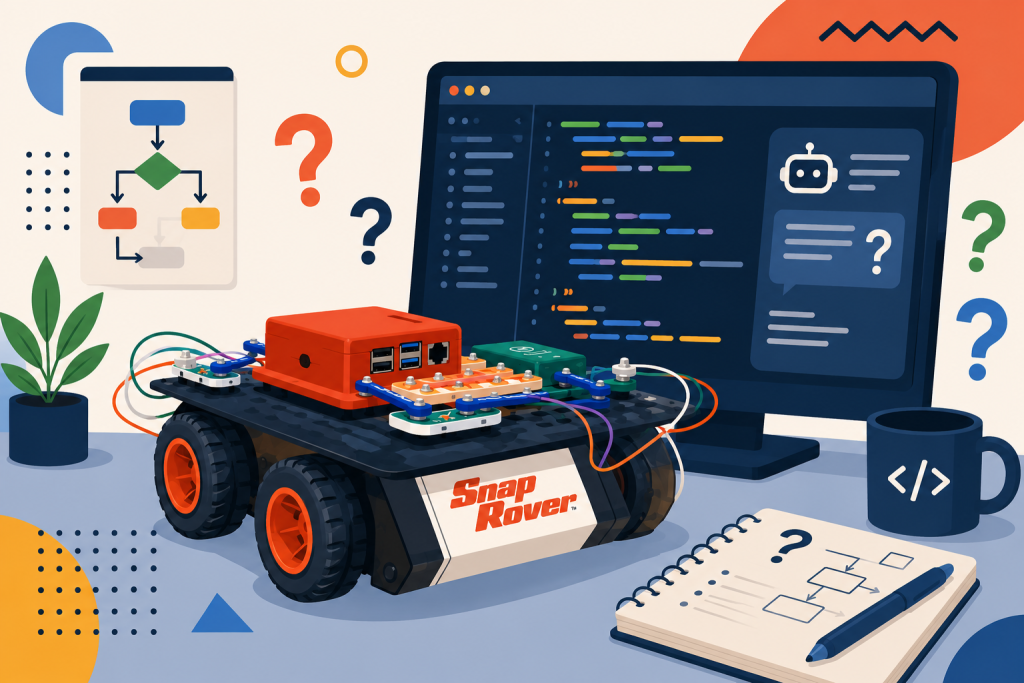
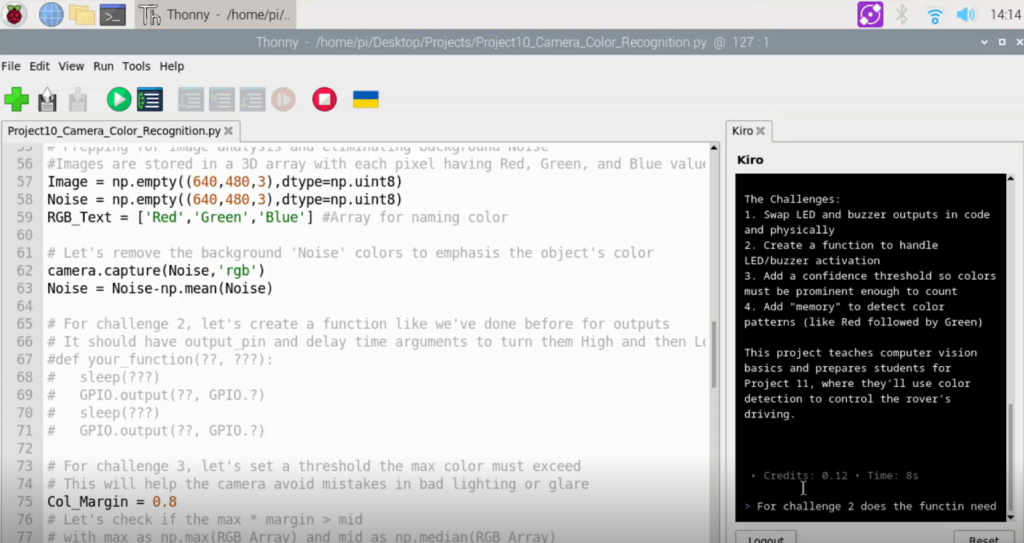
The DxHub team built an AI tutor that lives inside the student’s coding environment — no separate apps, no browser tabs, no context switching. Students open Thonny IDE on their Raspberry Pi and find a conversational AI sidebar ready to help. The interaction is designed to be friendly and approachable: students ask questions in plain English and receive guided responses that nudge them toward understanding rather than handing them solutions. When a student asks how to make their rover turn left, the tutor explains the concept of GPIO pin control and motor direction, then asks the student to try writing the code themselves — limiting direct code snippets to two lines maximum to preserve the learning experience.
The power of the system lies in its layered guardrail architecture. A set of steering configuration files governs every aspect of the AI’s behavior: context.md instructs the tutor to guide rather than give answers; content_policy.md enforces the school district’s acceptable use policies; rules.md prevents students from modifying the guardrails or extracting complete project solutions; and tech.md provides the rover hardware specification so the AI gives technically accurate advice for the student’s specific hardware. The AI has access to the project solutions internally but is strictly configured never to reveal them — it uses that knowledge only to provide better-targeted hints.
The entire tutor — Thonny IDE plugin, AI backend, and steering configuration — installs with a single setup script and deploys across a classroom of Raspberry Pi units. A teacher can set up 30 AI-tutored coding stations without any cloud configuration or per-student account management.

Technical Solution
The Smart Rover AI Tutor is built as a Thonny IDE plugin, allowing it to integrate natively into the IDE that students already use for rover programming. The plugin communicates with Kiro, an AI-powered development environment from AWS, through its command-line interface (kiro-cli) which handles conversation management, steering configuration, and interfaces with the underlying language model.
The steering system is the architectural centerpiece. Configuration files stored in ~/.kiro/steering/ form a layered instruction set that shapes the AI’s behavior without modifying the underlying model. This separation of concerns means the guardrails can be updated independently — a school district can adjust content policies without touching the tutor’s technical knowledge base, and the DxHub team can update hardware specifications without affecting behavioral rules. The steering files include:
- context.md — Defines the AI’s role as a Socratic tutor that guides through questions rather than answers
- rules.md — Enforces code snippet limits, prevents guardrail modification attempts, blocks solution extraction
- content_policy.md — Implements school district acceptable use policies for all AI-generated content
- tech.md — Complete hardware specification for the rover (Raspberry Pi 4, GPIO pinout, motor controller, picamera, ultrasonic sensors)
- codebase_path.md — Points to SmartFactory’s project solutions so the AI can reference them internally for better-targeted guidance
Next Steps
The next step is rolling the Smart Rover AI Tutor out to classrooms alongside the Believers program. With the tutor installable through a single setup script, deployment scales naturally — every Raspberry Pi that ships with a Smart Rover kit can ship with a guardrailed AI coding assistant ready to go.
This project demonstrates the strength of the DxHub’s Cloud Innovation Center partnerships. By bringing together The Smart Factory’s rover hardware and curriculum, the Deloitte team’s enterprise experience, and Cal Poly’s student developers, the collaboration created an ecosystem that none of the partners could have built alone. As AI becomes an increasingly essential skill across every profession, projects like the Smart Rover AI Tutor show how thoughtful guardrails and purpose-built educational tools can make AI-powered learning accessible without undermining the learning process itself.
Supporting Documents
| Source Code | All of the code and assets developed during the course of creating the Smart Rover AI Tutor prototype. |
| Deloitte Believers Program | A workforce development initiative that aims to equip students with industry-relevant STEM skills, hands-on training, and meaningful career exposure to help them thrive in the modern workforce. |
About the DxHub
The Cal Poly Digital Transformation Hub (DxHub) is a strategic relationship with Amazon Web Services (AWS) and is the world’s first cloud innovation center supported by AWS on a University campus. The primary goal of the DxHub is to provide students with real-world problem-solving experiences by immersing them in the application of proven innovation methods in combination with the latest technologies to solve important challenges in the public sector. The challenges being addressed cover a wide variety of topics including homelessness, evidence-based policing, digital literacy, virtual cybersecurity laboratories and many others. The DxHub leverages the deep subject matter expertise of government, education, and non-profit organizations to clearly understand the customers affected by public sector challenges and develop solutions that meet the customer needs.