
Team: Plan-Pal
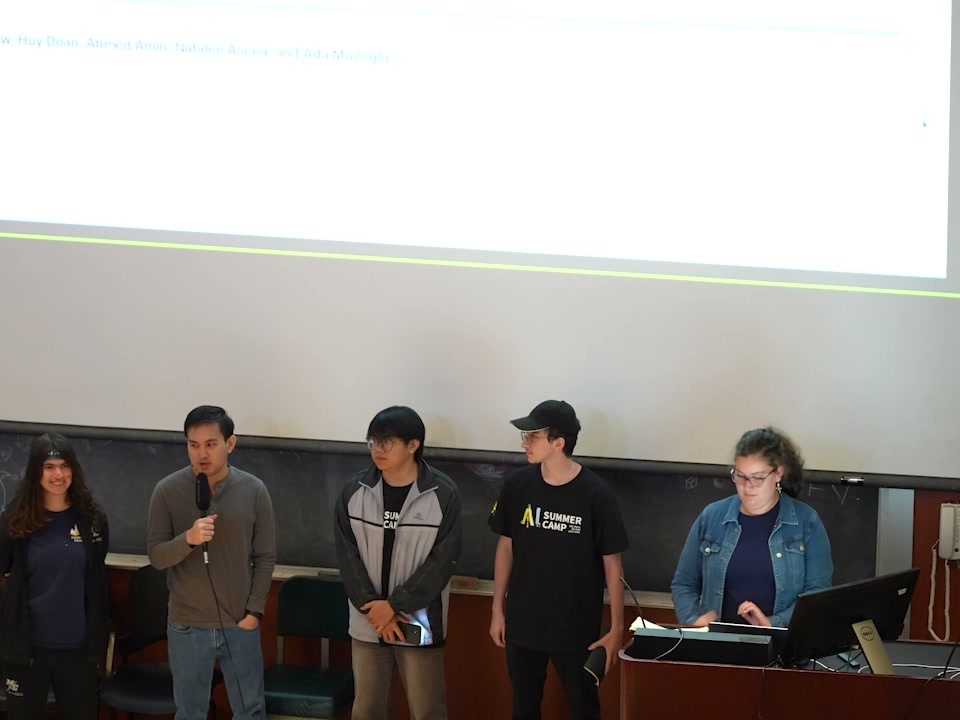
- Natalee Alicea
- Ada Muzoglu
- Ahmed Amin
- Thet Htoo Zaw
- Huy Doan
“At community colleges, students could lose entire year not because they fail a class, but because they could plan it wrong.”
Problem
Engineering students at Antelope Valley College repeatedly ask the same questions about course sequencing, prerequisites, math and physics timing, and transfer preparation. Advisors answer these questions one at a time — in person and by email. A deeper problem compounds this: students plan around the idealized catalog sequence, but many courses run only in fall or only in spring, and when a required course isn’t offered the term a plan assumes, students lose an entire semester. Pathway mapping requires counselor knowledge that not all counselors share, and the manual process of checking university websites and cross-referencing assist.org for each student is time-intensive. Without instant access to accurate, schedule-grounded pathway information that reflects actual term-by-term offering patterns, students experience unnecessary delays in registration and degree progress while counselors remain overwhelmed with repetitive inquiries that could be self-served or augmented.
Technical Solution
The Plan-Pal team built a chatbot that helps students plan their transfer and course paths using real catalog data, transfer rules, and live class availability. It runs on Amazon Bedrock AgentCore (agentic harness), which manages the conversation, memory, and secure access to its tools. To answer questions, it uses retrieval-augmented generation (RAG): it looks up reviewed course and policy documents in an Amazon Bedrock Knowledge Base, and models on Amazon Bedrock (large language model access) builds a personal plan. A small AWS Lambda (serverless compute) program checks current openings in the campus Banner system and double-checks each plan against prerequisites and unit limits. Course files are stored in Amazon S3 (cloud storage), and because the course lists and rules are just configuration, the system can extend to more majors and campuses. It answers common questions so counselors have more time and gives students quick, trustworthy guidance—not a registration guarantee. This provides both students and counselors with intuitive and easy to use evidence based class planning.
Showcase
| Presentation Recording | A recording of AI Summer Camp students presenting their project. |
| Slideshow | The accompanying slides shown in the video. |
| Source Code | All of the code and assets developed during the course of the AI Summer Camp. |
About the DxHub
The Cal Poly Digital Transformation Hub (DxHub) is a strategic relationship with Amazon Web Services (AWS) and is the world’s first cloud innovation center supported by AWS on a University campus. The primary goal of the DxHub is to provide students with real-world problem-solving experiences by immersing them in the application of proven innovation methods in combination with the latest technologies to solve important challenges in the public sector. The challenges being addressed cover a wide variety of topics including homelessness, evidence-based policing, digital literacy, virtual cybersecurity laboratories and many others. The DxHub leverages the deep subject matter expertise of government, education, and non-profit organizations to clearly understand the customers affected by public sector challenges and develop solutions that meet the customer needs.