
Team: Call Willie
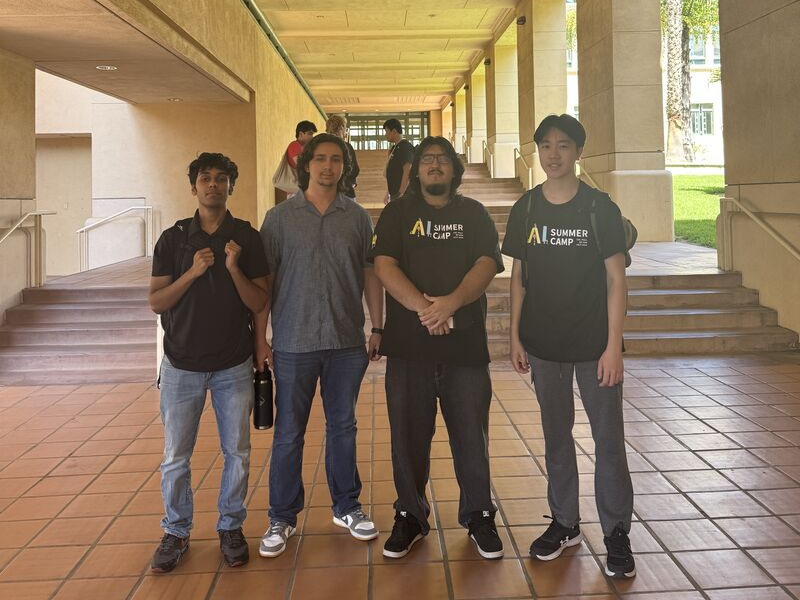
Team Participants:
Pranay Jain (San Jose State University)
Andrew Nguyen (California State University, Fullerton)
Asher Russo (California Polytechnic State University, Humboldt)
Jose Ochoa (Cal State University, Stanislaus)
“Our goal is to route every user to the right resource in the fewest interactions, the least time and across the widest range of problems.”
Problem
At Chico State, students, staff, and visitors experiencing personal, academic, financial, safety, and emotional challenges often struggle to identify which campus office can help them, particularly during moments of stress. Support information is fragmented across multiple separate systems including the Safety App, UPD, Title IX, Counseling and Wellness, Basic Needs, and various departmental websites, forcing users to navigate institutional terminology they don’t naturally use. Students say ‘I’m hungry’ rather than knowing to seek ‘Basic Needs,’ creating barriers to seeking help and delays in critical intervention. The existing Care Team referral form remains underutilized because students don’t know it exists, leaving critical support resources undiscovered and high-need individuals without timely assistance.
Technical Solution
The Call Willie team developed an AI campus assistant called “Willie” that runs as both a native iOS app and a web app from a single React Native codebase, delivering conversational answers about campus services alongside interactive maps with live GPS turn-by-turn navigation and tap-to-call contact cards. The solution uses AWS Lambda (serverless compute) behind Amazon API Gateway (API layer) to run a Python agent orchestrator that integrates Amazon Bedrock (managed generative AI) with Claude Sonnet for conversational responses, Amazon Bedrock Knowledge Bases (managed RAG) to retrieve and ground answers in university content, and Amazon Bedrock Guardrails to block prompt injection attacks. When a student asks about a campus building or service, the agent classifies the intent and routes to the appropriate data source—location queries call the Google Places API to retrieve coordinates and business hours, while information queries retrieve from the knowledge base—and returns structured outputs that render as interactive UI elements: markdown text with verified hyperlinks, expandable map cards with walking or driving routes and live turn-by-turn navigation (heading-up camera follow, maneuver banners, off-route re-routing), and phone cards with tap-to-call buttons. The system is safety-aware, proactively surfacing emergency numbers for crisis questions, and it resolves follow-up questions using conversation history to answer clarifying queries without additional prompts. The web frontend is deployed to Amazon S3 and served via Amazon CloudFront (content delivery network) with Origin Access Control, enabling students and families to access Willie from any device while reducing repetitive inquiries to campus offices and making critical resources discoverable through natural conversation and map-based guidance.
Showcase
| Presentation Recording | A recording of AI Summer Camp students presenting their project. |
| Slideshow | The accompanying slides shown in the video. |
| Source Code | All of the code and assets developed during the course of the AI Summer Camp. |
About the DxHub
The Cal Poly Digital Transformation Hub (DxHub) is a strategic relationship with Amazon Web Services (AWS) and is the world’s first cloud innovation center supported by AWS on a University campus. The primary goal of the DxHub is to provide students with real-world problem-solving experiences by immersing them in the application of proven innovation methods in combination with the latest technologies to solve important challenges in the public sector. The challenges being addressed cover a wide variety of topics including homelessness, evidence-based policing, digital literacy, virtual cybersecurity laboratories and many others. The DxHub leverages the deep subject matter expertise of government, education, and non-profit organizations to clearly understand the customers affected by public sector challenges and develop solutions that meet the customer needs.