
Streamlining Audit Follow-ups with AI: AuditEngine Transforms Evidence Management at Cal Poly

Overview
The California Polytechnic State University, San Luis Obispo (Cal Poly) Digital Transformation Hub (DxHub), powered by Amazon Web Services (AWS), has collaborated with Cal Poly’s Office of Audit to develop AuditEngine, an innovative solution that leverages generative artificial intelligence (AI) to automate audit follow-up processes. This groundbreaking tool transforms how universities track and verify audit remediation efforts, significantly reducing manual workload while maintaining rigorous compliance standards.
Problem
Audit departments face significant challenges in managing follow-up processes for audit findings. At Cal Poly, audit staff spent considerable time manually extracting tasks from audit reports and creating tracking spreadsheets – up to 8 hours per report. Additionally, verifying evidence submissions was time-intensive, especially for complex documentation spanning dozens of pages. This manual approach led to:
– Inefficient use of auditor time on administrative tasks
– Delays in evidence verification and follow-up
– Risk of human error in task extraction and tracking
– Challenges in managing multiple concurrent follow-ups
– Difficulty in quickly locating relevant evidence within large documents

Innovation In Action
AuditEngine revolutionizes audit follow-up management through two key innovations:
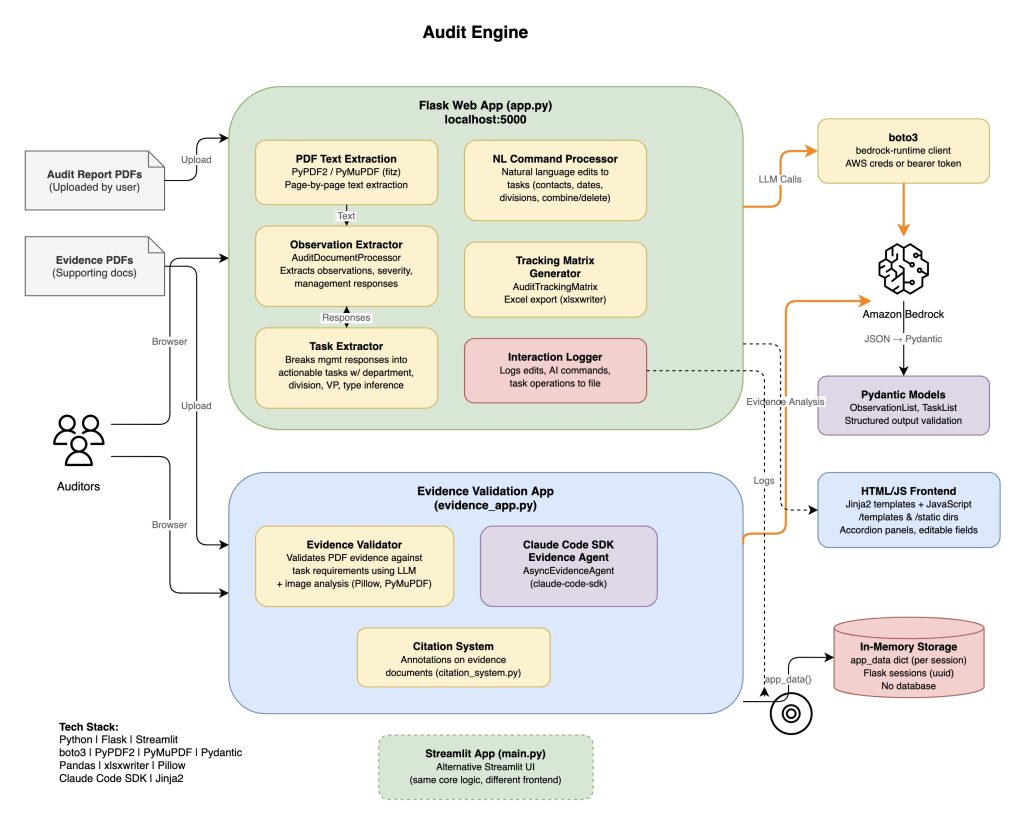
- Automated Task Extraction: The system uses advanced natural language processing to automatically convert PDF audit reports into structured tracking spreadsheets. An AI-powered interface enables bulk editing of tasks through natural language commands, eliminating repetitive manual work.
- Intelligent Evidence Verification: AuditEngine employs sophisticated AI to analyze submitted evidence against audit requirements. The system can:
– Automatically assess document relevance and completeness
– Annotate key sections in evidence documents
– Verify document authenticity and recency
– Generate targeted follow-up communications
– Provide clear reasoning for verification decisions
The solution maintains high accuracy through a human-in-the-loop approach, where AI assists but doesn’t replace auditor judgment.
Technical Solution
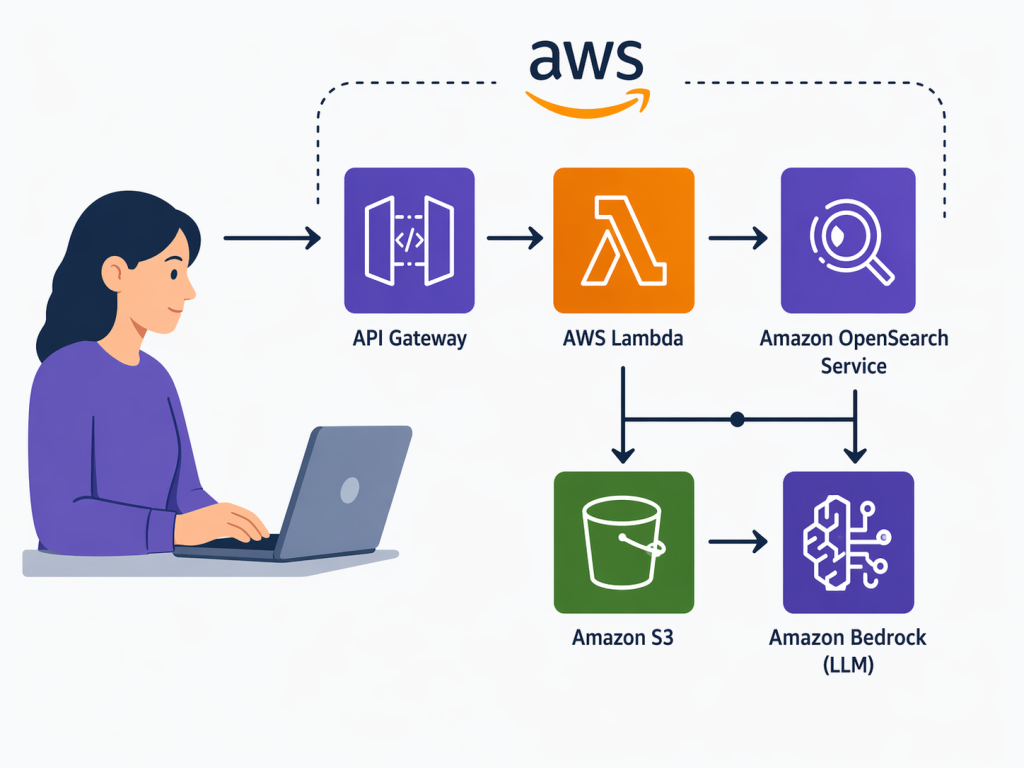
AuditEngine’s architecture leverages several AWS managed services to ensure security, scalability, and reliability:
– Amazon Bedrock: Powers the secure processing of audit reports and evidence verification
– AWS Lambda: Handles backend processing and business logic
– Amazon API Gateway: Manages API requests and authentication
– Amazon Cognito: Provides secure user authentication
– Amazon S3: Stores audit reports and evidence documents
– Amazon DynamoDB: Manages task and verification data
The system uses a modular architecture that allows for easy updates to verification logic and integration with existing audit workflows.
Next Steps
Cal Poly’s Office of Audit is currently piloting AuditEngine internally and coordinating with other California State University system audit departments to evaluate its effectiveness and gather feedback for future improvements.

Supporting Documents
| Source Code | All of the code and assets developed during the course of creating the prototype. |
About the DxHub
The Cal Poly Digital Transformation Hub (DxHub) is a strategic relationship with Amazon Web Services (AWS) and is the world’s first cloud innovation center supported by AWS on a University campus. The primary goal of the DxHub is to provide students with real-world problem-solving experiences by immersing them in the application of proven innovation methods in combination with the latest technologies to solve important challenges in the public sector. The challenges being addressed cover a wide variety of topics including homelessness, evidence-based policing, digital literacy, virtual cybersecurity laboratories and many others. The DxHub leverages the deep subject matter expertise of government, education, and non-profit organizations to clearly understand the customers affected by public sector challenges and develop solutions that meet the customer needs.