
Team: IT Software Requests & Reviews
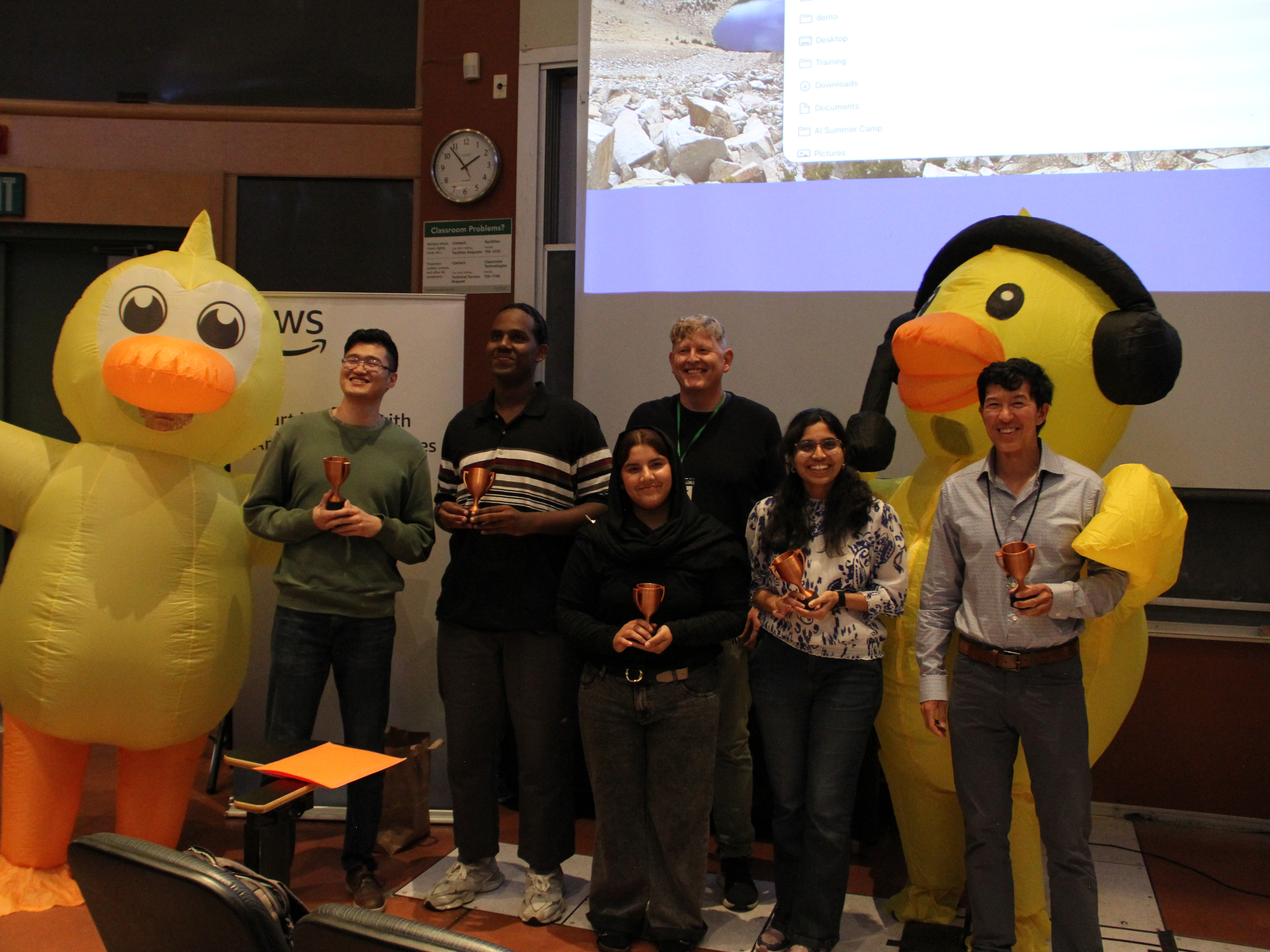
Team Participants:
Zahra Ghausi (California State University, Stanislaus State)
Matthew Graca (California State University, Los Angeles)
Mrunal Kotkar (San Jose State University)
Babiker Babiker (California State University, Fullerton)
Rakesh Saraswat (California State University, Long Beach)
Alvin Henry (San Diego State University)
“The IT reviewer has to handle manually duplicate requests or requests that are similar but not exactly what the professor is looking for.”
Problem
SDSU’s IT organization manages software procurement requests that require security, accessibility, and integration reviews, but historical review outcomes and vendor contracts lack structure, making it difficult to surface prior findings, existing licenses, and precedent decisions. Reviewers in Security, ATI (Accessible Technology Initiative), Integration, and Procurement repeat evaluations of previously-reviewed software because institutional knowledge exists only in individual memory and scattered email threads. This reactive workflow results in lengthy review cycles for requesters, redundant vendor assessments, and inconsistent application of security and integration standards across similar software requests. The lack of searchable institutional memory prevents the organization from leveraging past reviews to accelerate current decisions and identify opportunities to consolidate duplicate purchases.
Technical Solution
The San Diego State team developed an AI-powered software request intelligence system that transforms SDSU’s manual review process by replacing mandatory in-person interviews with a guided digital intake, an AI chatbot, automated compliance flagging, and AI-generated risk reports, all backed by a serverless AWS pipeline. The solution is built using a React frontend hosted on AWS Amplify (full-stack hosting), with a REST API layer provided by Amazon API Gateway that routes requests to AWS Lambda (serverless compute) functions that handle intake, chatbot conversation, and report generation. When a requester submits the intake form, they engage in a follow-up interview conducted by an AI chatbot powered by Amazon Bedrock (managed generative AI) using Claude models, which asks clarifying questions in plain English to gather the technical details normally collected in a manual IT interview, and the system automatically flags the request for ATI accessibility, Security, or Integration review by applying the same thresholds a human reviewer would use. For flagged requests, a Lambda function fetches the vendor’s actual compliance documents—privacy policy, Terms of Service, VPAT accessibility report, and HECVAT security assessment—from the public web when not provided by the requester, and Amazon Bedrock generates a comprehensive risk report analyzing these documents against institutional requirements, with all supporting evidence stored in Amazon S3 (cloud storage) for reviewer access. Reviewers from the ATI, Security, and Integration teams view their queued requests through dedicated dashboards, can upload or attach additional documents directly to S3, and approve or override the AI recommendations with a reason, while Amazon SES (email delivery) sends automated notifications at every stage—submission confirmations, missing-document alerts, reminders for incomplete chatbot interviews triggered by Amazon EventBridge (event scheduling) on a one-minute schedule, and final verdicts. All request data is stored in Amazon DynamoDB (NoSQL database) with automatic status tracking, providing requesters with live visibility into where their request stands without needing to follow up with IT, and the fully serverless architecture ensures the system scales automatically with request volume while eliminating the manual interview bottleneck and creating a searchable institutional knowledge base that prevents similar requests from being re-reviewed from scratch.
Showcase
| Presentation Recording | A recording of AI Summer Camp students presenting their project. |
| Slideshow | The accompanying slides shown in the video. |
| Source Code | All of the code and assets developed during the course of the AI Summer Camp. |
About the DxHub
The Cal Poly Digital Transformation Hub (DxHub) is a strategic relationship with Amazon Web Services (AWS) and is the world’s first cloud innovation center supported by AWS on a University campus. The primary goal of the DxHub is to provide students with real-world problem-solving experiences by immersing them in the application of proven innovation methods in combination with the latest technologies to solve important challenges in the public sector. The challenges being addressed cover a wide variety of topics including homelessness, evidence-based policing, digital literacy, virtual cybersecurity laboratories and many others. The DxHub leverages the deep subject matter expertise of government, education, and non-profit organizations to clearly understand the customers affected by public sector challenges and develop solutions that meet the customer needs.