
Team: Wildcat Navigators
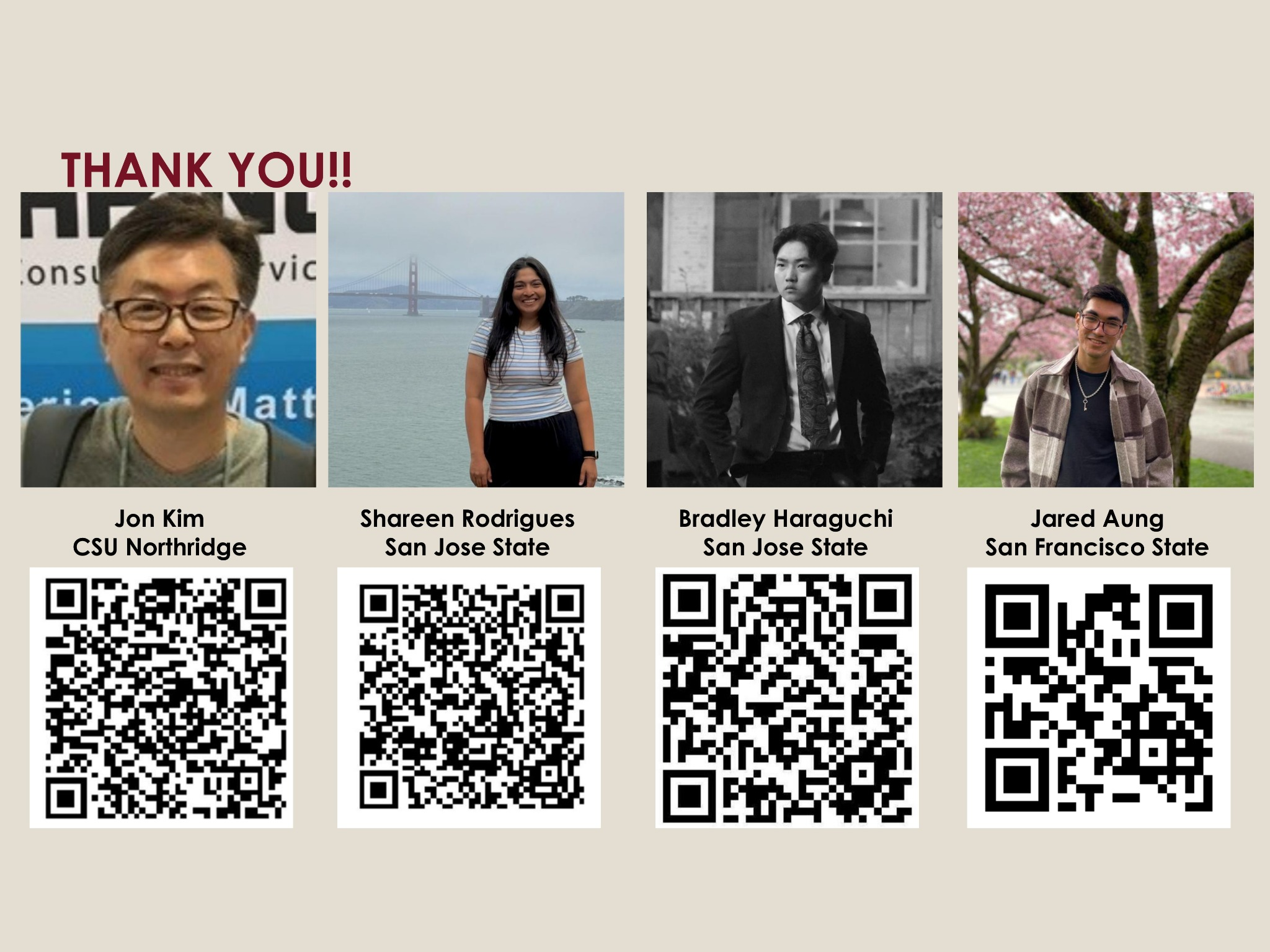
Team Participants:
- Bradley Haraguchi (San Jose State University)
- Jon Kim (California State University, Northridge)
- Jared Aung (San Francisco State University)
- Shareen Rodrigues (San Jose State University)
“Campus information currently exists across numerous websites, PDFs, forms, policies, and FAQs—this results in poor user experience and increased phone calls, email volume, and duplicate staff efforts.”
Problem
At Chico State, campus service information is fragmented across multiple websites, department pages, and reservation systems, forcing students, families, employees, and community members to hunt across disparate sources to complete basic processes like accommodation requests, event participation, and facility rentals. Users must navigate scattered forms, deadlines, fees, and approval workflows without a single source of truth, leading to high call and email volumes for basic process information and facility-reservation abandonment. This fragmentation results in extended time to locate the correct forms and answers, while individuals with disabilities and non-English speakers face particular challenges accessing hard-to-find information that isn’t surfaced in plain language. The decentralized information creates barriers to service access and overwhelms administrative staff with routine inquiries.
Technical Solution
The Wildcat Navigators team developed a conversational AI assistant called “Wildcat Navigator” that helps students, families, visitors, employees, people with disabilities, and community members discover campus services, policies, facility information, and local Chico resources through natural language questions in a chat interface. The solution is built as a serverless application with a Next.js frontend and a backend using AWS Lambda (serverless compute) behind Amazon API Gateway (API layer) to handle chat requests, and it connects to Amazon Bedrock Knowledge Bases (managed RAG) to retrieve relevant documents from a curated knowledge base and generate cited, conversational answers using a foundation model from Amazon Bedrock (managed generative AI). The team populated the knowledge base with structured markdown documents covering campus services and policies, and they built custom web scrapers to gather data on over 40 downtown Chico restaurants and signature community events from public sources, enriching each document with metadata for filtering by date, time, and type. When a user asks a question, the system performs semantic search over the knowledge base, generates an answer grounded in the retrieved documents, and returns inline citations with hyperlinks to source materials, enabling self-service discovery of hard-to-find information like accommodation request workflows, facility rental processes, and dining options. The assistant supports bilingual interactions, responding in Spanish when the user writes in Spanish, and maintains conversation context across multiple turns using session IDs, reducing the volume of repetitive inquiries to campus offices while making critical services more discoverable and accessible for the entire Chico State community.
Showcase
| Presentation Recording | A recording of AI Summer Camp students presenting their project. |
| Slideshow | The accompanying slides shown in the video. |
| Source Code | All of the code and assets developed during the course of the AI Summer Camp. |
About the DxHub
The Cal Poly Digital Transformation Hub (DxHub) is a strategic relationship with Amazon Web Services (AWS) and is the world’s first cloud innovation center supported by AWS on a University campus. The primary goal of the DxHub is to provide students with real-world problem-solving experiences by immersing them in the application of proven innovation methods in combination with the latest technologies to solve important challenges in the public sector. The challenges being addressed cover a wide variety of topics including homelessness, evidence-based policing, digital literacy, virtual cybersecurity laboratories and many others. The DxHub leverages the deep subject matter expertise of government, education, and non-profit organizations to clearly understand the customers affected by public sector challenges and develop solutions that meet the customer needs.